
Every single day, thousands of cargo ships cut across the world’s oceans — quietly carrying the lifeblood of global trade. From your smartphone to your favorite sneakers, chances are they’ve all spent some time in a shipping container at sea. In fact, around 90% of world trade moves by sea, powering an annual trade value of over $14 trillion. Yep, the ocean is basically one giant conveyor belt for the global economy.
But here’s the thing — sea freight isn’t just about loading boxes onto big ships and waving goodbye. It’s a complex, highly coordinated dance between shipping lines, ports, freight forwarders, customs agents, and logistics planners — all working behind the scenes to make sure your goods get from factory to final destination safely and efficiently.
From manufacturers moving machinery, to retailers restocking shelves, to e-commerce brands delivering international orders, sea freight keeps businesses running and global supply chains alive. It’s the unsung hero of modern trade — affordable, scalable, and surprisingly sophisticated.
So if you’ve ever wondered how sea freight works — how a simple container leaves China and ends up at your warehouse — you’re in the right place.
Sea freight remains the most cost-effective way to import bulk goods from China to Bangladesh, but choosing the right route, container type, and provider affects both your cost and delivery timeline. This guide covers how sea freight from China to Bangladesh works, what it costs, and how to decide between FCL and LCL.
Table of Contents
What Is Sea Freight?
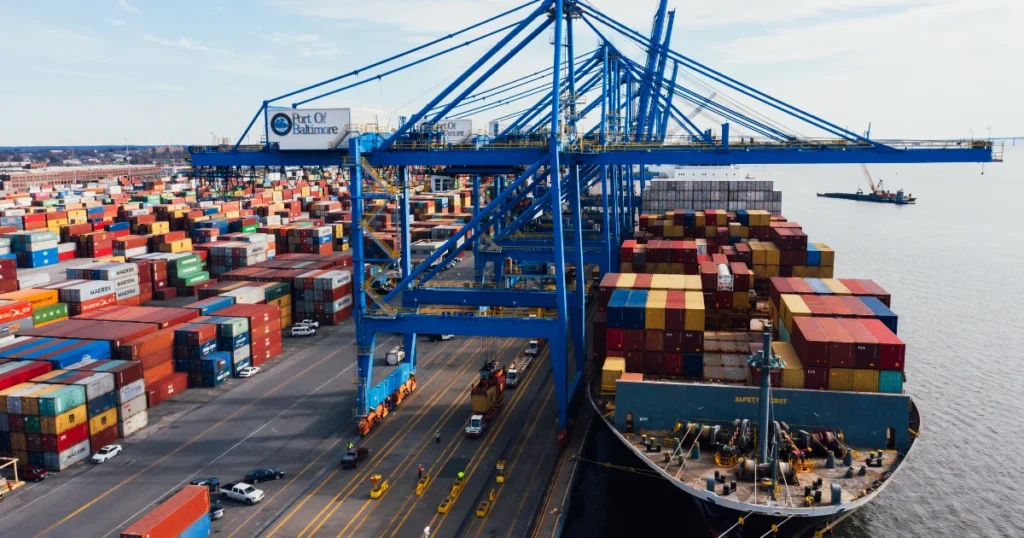
Let’s start with the basics — sea freight (also known as ocean freight or maritime shipping) is the transportation of goods across international waters using large cargo ships. Think of it as the global highway for trade — except instead of cars and trucks, you’ve got massive vessels carrying thousands of containers filled with everything from clothes and electronics to heavy machinery and raw materials.
Now, here’s where it gets interesting. Sea freight isn’t just one big boat moving random boxes — it’s a highly structured, containerized transport system designed to move goods safely, efficiently, and cost-effectively across long distances. Containers — those familiar metal boxes — are the real heroes here. They make loading, unloading, and transferring goods between ships, trucks, and trains seamless (and save a ton of time and money).
So why do businesses choose sea freight over air or land transport? In one word: cost. When you’re shipping large or heavy cargo, sea freight can be up to 10 times cheaper than air freight. Sure, it’s slower — we’re talking weeks instead of days — but when you’re moving tons of goods, that cost difference is a big deal.
💡 Example:
Let’s say you’re shipping a 20-foot container from Shanghai to Chittagong. By sea, you might pay around $900–$1,200, and it’ll take about 18–25 days. Ship that same load by air? You’d easily spend $10,000+, and while it might reach in 2–3 days, your wallet might need a longer recovery time.
That’s why industries like manufacturing, retail, automotive, and e-commerce rely heavily on sea freight. It’s perfect for bulk goods, non-urgent deliveries, and long-term inventory planning.
In short, when you’re trying to move big volumes without breaking the bank, sea freight is your best friend — slow, steady, and absolutely essential.
And now that you know what it is, let’s dive deeper into how sea freight works — from booking a container to tracking it across the open ocean.
Key Players in Sea Freight
When it comes to how sea freight works, it’s not just one company moving goods from Point A to Point B — it’s an entire network of professionals working together like a perfectly tuned (well, mostly) orchestra. Each player has a critical role in keeping your shipment moving across oceans without a hitch.
Let’s break down the main characters in this global logistics story 👇
1️⃣ Shipper
This is you — or your supplier. The shipper is the business sending or receiving goods. They’re responsible for preparing the cargo, packaging it properly, and ensuring all documentation (like the commercial invoice and packing list) is accurate.
💬 Think of the shipper as the one who starts the whole chain reaction — no shipper, no shipment.
2️⃣ Freight Forwarder
Meet your logistics matchmaker. Freight forwarders are the middlemen who coordinate everything — booking space with carriers, managing paperwork, arranging trucking, and ensuring customs compliance.
They don’t usually own ships themselves, but they know which routes, carriers, and schedules will get your goods delivered fastest (and at the best rates).
💡 Pro tip: Working with a reliable forwarder like Fangrun Logistics can save you from shipping headaches, hidden charges, and confusing port jargon.
3️⃣ Carrier / Shipping Line
These are the big players who actually own and operate the vessels — massive ships that can carry over 20,000 containers at a time. They’re the muscle behind sea freight.
Major carriers include Maersk, MSC, COSCO, CMA CGM, and others — all running global shipping routes that connect factories in China to ports around the world.
🚢 Fangrun Logistics partners with trusted carriers to ensure reliable, efficient ocean transport solutions.
4️⃣ Customs Broker
These are your customs superheroes. They handle import and export documentation, duties, taxes, and ensure everything complies with trade regulations. A single typo in your paperwork can delay your cargo — and customs brokers exist to make sure that doesn’t happen.
5️⃣ Port & Terminal Operators
These teams work on the front lines at the ports — loading, unloading, and storing containers as they move between ships and trucks. They manage cranes, yards, and storage areas, ensuring the port runs like clockwork (even when it’s packed with thousands of containers).
Simple Visual Flow of How They All Connect:
[SHIPPER] → [FREIGHT FORWARDER] → coordinates booking, paperwork, and trucking
↓
[CARRIER / SHIPPING LINE] → moves the goods across the ocean
↓
[PORT & TERMINAL OPERATORS] → handle loading/unloading at both ends
↓
[CUSTOMS BROKER] → clears goods for import/export
↓
[CONSIGNEE / BUYER] → receives the shipment
Each of these players has a unique role, but together they make the sea freight system one of the most efficient and reliable logistics networks in the world.
Next, let’s explore how this process actually unfolds — from booking a container to delivery at your warehouse.
The Complete Guide to Ocean Transport: China to Bangladesh
The Step-by-Step Sea Freight Process
So, how exactly does sea freight work — from your supplier’s warehouse in China to your warehouse or store across the world?
Let’s break down the entire journey of a shipment into clear, easy-to-follow steps.
Step 1: Quotation & Booking
It all starts with a rate request. The shipper (that’s you or your supplier) reaches out to a freight forwarder or carrier for a shipping quote.
You’ll provide basic details like:
• Cargo type and weight
• Pickup and destination ports
• Preferred shipping date
From there, you’ll decide on the container type (Full Container Load – FCL or Less than Container Load – LCL) and the most cost-effective route.
💡 Pro tip: Always compare a few quotes and check sailing schedules — cheaper isn’t always better if it means longer transit times.
Step 2: Export Haulage
Once the booking is confirmed, your goods need to reach the origin port. This stage, called export haulage, usually involves trucking or rail transport from your supplier’s factory or warehouse to the port terminal.
Think of it as your cargo’s “road trip” before the big ocean journey begins.
Step 3: Export Customs Clearance
Before your shipment can leave the country, it needs to clear export customs.
This includes submitting key documents like:
• Commercial Invoice
• Packing List
• Certificate of Origin
• Export License (if required)
Once approved, your cargo gets the official green light to board the vessel.
Step 4: Origin Handling & Loading
Now it’s time for action at the port. The freight forwarder or terminal operator oversees:
• Cargo inspection
• Container stuffing (packing goods into containers)
• Weighing and sealing
• Loading onto the assigned vessel
Everything is carefully logged and tracked, so nothing goes missing in the shuffle.
Step 5: Ocean Transit
Here’s where the magic happens. The vessel sets sail, following international shipping routes that may include transshipment at major hubs like Singapore, Colombo, or Port Klang.
Transit times depend on distance and route — for example, China to Bangladesh takes about 18–25 days.
During this time, you’ll receive tracking updates and ETA notifications, so you can plan your next steps.
🌊 Fun fact: A large container ship can travel more than 480 nautical miles in a single day — that’s like going from Shanghai to Hong Kong in under 24 hours!
Step 6: Destination Handling
Once your ship arrives, containers are unloaded, inspected, and sorted at the destination port.
Terminal operators move them to Container Yards (CY) for temporary storage while they wait for customs clearance.
This phase can be quick — or painfully slow — depending on port congestion and paperwork accuracy.
Step 7: Import Customs Clearance
Now comes the critical part: import clearance. Customs authorities review your documents, verify cargo details, and calculate duties, taxes, and VAT.
A customs broker usually handles this step to make sure nothing is missed. Delays here are common if documents are incomplete or incorrect — so double-check everything before your cargo arrives.
Step 8: Inland Delivery
Once cleared, the container is released for final delivery. This could mean trucking or rail transport to your warehouse, distribution center, or customer.
And just like that — your shipment’s ocean adventure is complete!
🌎 In summary:
Sea freight is a carefully choreographed system — from booking to delivery — involving multiple checkpoints and specialists.
The more you understand each stage, the easier it becomes to plan, budget, and optimize your global shipping operations like a pro.
Next up, let’s look at the different types of sea freight services and how to choose the best one for your business.
Types of Sea Freight Services
Not all cargo is created equal — and neither are sea freight services. Depending on your shipment’s size, nature, and urgency, there’s a transport option designed to fit your needs (and your budget).
Here’s a quick rundown of the main types of sea freight services and when to use each:
1. FCL (Full Container Load)
Description: You get exclusive use of an entire container — 20ft, 40ft, or even 40ft high cube. No one else’s cargo shares the space.
Ideal For:
✅ Large-volume shipments
✅ High-value goods that need security
✅ Businesses that ship regularly or in bulk
💡 Example: If you’re exporting a full load of electronics from Shenzhen to Chittagong, FCL is your best bet. It’s faster at both ends since there’s no need to consolidate or deconsolidate cargo.
2. LCL (Less than Container Load)
Description: Your shipment shares container space with other consignments. You pay only for the volume you use.
Ideal For:
✅ Small or mixed shipments
✅ Startups or small businesses
✅ Shipments without strict delivery deadlines
💡 Pro tip: LCL is cost-effective but can take longer because it involves cargo consolidation at the origin and deconsolidation at the destination.
3. Break Bulk Shipping
Description: Used for non-containerized or oversized cargo that can’t fit inside standard containers — such as large machinery, construction equipment, or wind turbine blades.
Ideal For:
✅ Industrial and heavy-duty shipments
✅ Cargo that’s oddly shaped or too large for containers
💡 Example: Shipping an excavator or industrial generator — you’ll need a break-bulk service where each item is loaded individually onto the vessel.
4. RORO (Roll-on/Roll-off)
Description: Short for “Roll-on/Roll-off,” this method allows vehicles to be driven directly onto and off the ship using ramps.
Ideal For:
✅ Cars, trucks, buses, and construction vehicles
✅ Easy, safe, and efficient vehicle transport
💡 Fun fact: Major automakers use RORO vessels to move thousands of cars globally every week — like a floating parking garage on the ocean!
5. Reefer Containers (Refrigerated Containers)
Description: These are temperature-controlled containers designed for goods that must stay cool or frozen during transit.
Ideal For:
✅ Food and beverages
✅ Pharmaceuticals and medical supplies
✅ Perishable items like fruits, seafood, or flowers
💡 Example: Exporting frozen shrimp or vaccines from China to Bangladesh? A reefer container ensures your cargo arrives fresh, safe, and compliant with health standards.
🌊 In short:
Whether you’re moving a small consignment of electronics, an entire container of furniture, or a fleet of vehicles — there’s a sea freight service that fits your shipment perfectly.
Major Sea Freight Routes from China to Bangladesh
Most sea freight between China and Bangladesh moves through a handful of established port pairings, each suited to slightly different shipment needs.
Shanghai → Chattogram Shanghai is the world’s busiest container port, with the highest sailing frequency of any Chinese origin port. It’s a strong default for regular, high-volume shipments where reliability and schedule options matter more than shaving a few days off transit.
Shenzhen → Chattogram Shenzhen is well positioned for cargo already consolidated in the Shenzhen/Guangdong manufacturing belt, cutting down on inland trucking before the ocean leg begins. Popular for electronics and manufactured goods moving in FCL volumes.
Ningbo → Chattogram Ningbo is a major eastern China export hub known for competitive freight rates, often used for machinery and bulk manufactured goods.
Direct vs. transshipment Some sailings run direct; others route through transshipment hubs like Singapore, Colombo, or Port Klang. Direct routes are typically faster but can cost more; transshipment routes are often cheaper but add several days for unloading and reloading at the hub port. Transit time overall runs roughly 18–25 days regardless of exact routing, though transshipment can push toward the higher end.
All routes arrive at Chattogram Port, Bangladesh’s primary seaport, with inland delivery connections to Dhaka and other major commercial areas.
Essential Documents in Sea Freight
If there’s one thing every shipper learns quickly, it’s this — your cargo doesn’t sail without the right paperwork. Sea freight runs on documents as much as it runs on diesel fuel! These papers are your passport to smooth customs clearance and legal protection. Let’s break down the must-have documents you’ll need when shipping goods by sea.
1. Bill of Lading (B/L)
Think of this as the birth certificate of your shipment — the moment your goods are loaded, this document officially proves it.
• It’s a legal contract between you (the shipper) and the carrier.
• It serves as a receipt of goods and a title document (whoever holds it, owns the goods).
• Required at both the origin and destination ports for clearance.
💡 Pro tip: Always double-check the consignee details and container numbers — one typo here can delay your cargo for days!
2. Commercial Invoice
This is the financial backbone of your shipment — it lists what you’re shipping, how much it’s worth, and who’s buying it.
• Customs authorities use it to assess duties and taxes.
• Should include product description, HS codes, value, and buyer/seller info.
💬 Example: If you’re exporting 1000 LED lights from Shenzhen, your commercial invoice will list the unit price, total amount, and shipping terms (like FOB or CIF).
3. Packing List
While the invoice shows value, the packing list shows details.
• It specifies weight, dimensions, quantity, and packaging type for each item.
• Helps port workers and customs officials identify and handle cargo correctly.
• Crucial for both FCL and LCL shipments.
💡 Tip: Match your packing list to your invoice — inconsistencies can trigger inspections or customs holds.
4. Certificate of Origin (COO)
This little document can save you big money on import duties.
• Certifies where your goods were manufactured.
• Under trade agreements (like the ASEAN-China Free Trade Agreement, ACFTA), a Form E Certificate can qualify your shipment for reduced tariffs in Bangladesh.
💬 Example: A shipment of Chinese-made textile machinery imported into Bangladesh could enjoy lower import duties if a valid Form E is submitted.
5. Insurance Certificate
Even though ocean transport is generally safe, storms, accidents, and handling errors happen.
• The insurance certificate proves your cargo is covered against loss, theft, or damage during transit.
• Most shippers opt for “All Risk” coverage for peace of mind.
💡 Pro tip: Always insure high-value or fragile goods — a small premium can save you thousands if something goes wrong mid-voyage.
6. Import/Export Licenses
Depending on your product type, both China and Bangladesh may require special trade permits or licenses.
• For example, medical devices, food products, and chemicals often require pre-approval or certification before shipment.
• Missing permits can result in fines, confiscation, or re-export orders.
The 10 Most Important International Shipping Documents for Bangladeshi Importers
⚓ In summary:
The secret to mastering how sea freight works isn’t just knowing how ships move — it’s knowing how documents move. Keep them accurate, consistent, and complete, and your cargo will glide through customs like a ship on calm seas.
Up next: Let’s unpack the cost structure of sea freight — and where the hidden fees often hide.
Factors That Affect Sea Freight Cost
If you’ve ever wondered why your ocean shipping quote looks like a puzzle of numbers and abbreviations, you’re not alone. Sea freight pricing can feel like decoding a secret language. But once you understand the key factors that shape your total shipping cost, it all starts to make sense. Let’s break it down in plain English (and a bit of humor).
1️⃣ Freight Rate — The Heart of the Price
This is your base transport cost, the main chunk of what you pay to the carrier for moving your container from Point A to Point B.
• Rates fluctuate depending on shipping lines, port pairings, and market demand.
• For instance, shipping a 40ft FCL from Shanghai to Chattogram might cost anywhere between $800–$1,200, depending on the season and carrier capacity.
💡 Pro Tip: Book early during peak seasons (like pre-Eid or year-end holidays) — waiting too long can double your rate overnight!
2️⃣ Container Type & Volume
Not all containers are created equal — and neither are their prices.
• 20ft containers are great for smaller shipments (up to ~28 tons).
• 40ft containers carry about double the volume but only cost around 20–30% more, so they’re more cost-effective per cubic meter.
• Need to move something oversized? Flat racks or open-top containers will do the job — at a premium.
📦 FCL vs. LCL:
Full Container Load (FCL) = you pay for the entire container.
Less than Container Load (LCL) = you share space with others, paying $150–$250 per CBM, but with longer handling times.
3️⃣ Distance & Route
It’s simple: the longer the voyage, the higher the cost.
But it’s not just about distance — route complexity matters too.
Direct routes (e.g., Shenzhen → Chattogram) are faster but may be costlier.
Transshipment routes (via Singapore, Colombo, or Port Klang) are cheaper but take longer due to unloading and reloading.
💬 Example: Choosing a transshipment route could save you a few hundred dollars, but add 3–5 days to your delivery time.
4️⃣ Fuel Prices & Surcharges
Ever heard of BAF (Bunker Adjustment Factor) or CAF (Currency Adjustment Factor)?
These are the industry’s polite way of saying, “We’re passing our fuel and currency costs on to you.”
• BAF rises when global oil prices go up.
• CAF adjusts for foreign exchange fluctuations.
• Carriers may also add Peak Season Surcharges (PSS) when capacity gets tight.
⚙️ Tip: Keep an eye on oil trends — if prices spike, expect freight surcharges to follow.
5️⃣ Port Fees & Handling Charges
Once your container reaches the port, it starts accumulating small (but important) charges:
• Terminal Handling Charges (THC) for loading/unloading.
• Documentation fees, security surcharges, and port service fees.
• Some ports, like Chattogram, may have congestion surcharges during busy periods.
💡 Hidden Cost Alert: If your cargo sits too long, you might face demurrage (port storage) or detention (container return delays) fees.
6️⃣ Insurance & Customs Duties
Insurance is optional, but if your cargo is valuable, it’s practically non-negotiable. A small premium (0.3%–0.5% of cargo value) can save you from major losses.
Then comes customs duties, VAT, and clearance fees in Bangladesh. These depend on your product’s HS code and declared value.
📜 Example: Importing machinery might attract 5–10% duty, while electronics could face 15% or more — always check ahead with your customs broker.
Final Thoughts
The true art of mastering how sea freight works is knowing what drives your costs — and how to control them.
✅ Book early to lock in lower rates.
✅ Optimize your container space (don’t ship air!).
✅ Work with a trusted forwarder to avoid nasty surprises.
When done right, ocean transport remains the most cost-effective and dependable way to move goods between China and Bangladesh — and beyond.
Advantages and Limitations of Sea Freight
Let’s be honest — sea freight is the unsung hero of global trade. It doesn’t make headlines like air cargo, and it’s not as glamorous as express delivery, but it quietly moves over 90% of the world’s goods. Still, like every hero, it has its strengths and its kryptonite.
Here’s a clear look at the pros and cons — so you can decide if it’s the right choice for your business.
Advantages of Sea Freight
1️⃣ Most Economical for Large Shipments
If you’re shipping in bulk — think machinery, textiles, or raw materials — sea freight is your best friend.
Cost per unit is dramatically lower compared to air freight.
Example: A 20ft container from Shanghai to Chattogram might cost under $1,000, while flying the same volume could exceed $10,000.
💡 Pro Tip: The larger your shipment, the greater your savings per ton.
2️⃣ Can Carry (Almost) Anything
Whether it’s cars, chemicals, or cotton — sea freight can handle it all.
From standard containers to flat racks, tankers, and RORO ships, the ocean has a vessel for every kind of cargo.
Oversized? No problem. Fragile? There’s a solution. Temperature-sensitive? Hello, reefer containers.
3️⃣ Environmentally Efficient 🌱
Believe it or not, sea freight is the greenest mode of long-distance transport.
Ships emit about 3–4 grams of CO₂ per ton-kilometer, compared to 500 grams for air freight.
Many modern vessels are now adopting low-sulfur fuels and cleaner propulsion systems, making sea freight even more sustainable.
🌍 Fun Fact: If global shipping were a country, it would rank 6th in the world for efficiency in moving goods per unit of energy consumed!
4️⃣ Well-Established Global Networks
Sea freight has been the backbone of global trade for centuries — and it shows.
Every major port is interconnected through vast shipping alliances.
Routes like China → Bangladesh, Europe → Asia, and Middle East → South Asia have regular, dependable sailings.
In other words, you’re not reinventing the wheel — you’re joining a well-oiled global system that works.
Limitations of Sea Freight
1️⃣ Slower Than Air Transport
Let’s face it — ships move at their own pace.
A typical shipment from China to Bangladesh takes 10–20 days, versus 1–3 days by air.
If you’re moving perishable goods or chasing tight deadlines, sea freight might test your patience.
💬 Pro Tip: Combine sea and air for critical shipments — fast for urgent items, ocean for bulk restock.
2️⃣ Sensitive to Weather and Port Congestion
Storms, typhoons, or even political unrest can delay ships.
Major hubs like Singapore or Colombo often face congestion, adding extra days to your schedule.
Seasonal surges (like before Lunar New Year or Eid) can make things worse.
📅 Plan ahead: Book your space 2–3 weeks early to stay ahead of the crowd.
3️⃣ Requires More Documentation and Planning
Between the Bill of Lading, Commercial Invoice, Certificate of Origin, and customs declarations, ocean freight involves paperwork galore.
One small typo can hold your cargo hostage at the port.
That’s why working with a reliable freight forwarder (like Fangrun Logistics 👋) can save you time, stress, and money.
⚓ In Short
Sea freight is unbeatable for cost efficiency, versatility, and environmental sustainability — but it demands patience, planning, and professional coordination.
If you value reliability and scale over speed, sea freight is your strongest shipping strategy.
And if you’d rather not navigate the complexities alone?
👉 Partner with experts like Fangrun Logistics to make your sea freight journey smooth sailing from port to port.
Operational and Risk Factors in Sea Freight
Even though sea freight runs like a global superhighway, it’s not without its bumps — or waves 🌊. Behind every smooth shipment are dozens of variables quietly determining whether your cargo arrives on time, intact, and on budget. Let’s break down the main factors that influence the reliability and safety of sea freight, so you can plan smarter and ship with confidence.
1️⃣ Incoterms: Who’s Really in Charge (and Paying)?
If you’ve ever wondered who’s responsible when something goes wrong mid-ocean, Incoterms have the answer.
These international trade rules define when the risk and cost transfer from the seller to the buyer.
Here are a few common examples:
FOB (Free On Board): Seller handles everything up to loading the vessel. Once the cargo is on board, the buyer takes responsibility.
CIF (Cost, Insurance, and Freight): Seller covers cost, insurance, and shipping to the destination port — but risk still transfers once the goods are on board.
EXW (Ex Works): The buyer takes charge (and risk) right from the seller’s doorstep.
💡 Pro Tip: For new importers, FOB is often the safest choice — it gives you control over the carrier and freight costs without taking on too much early risk.
2️⃣ Weather and Port Congestion: The Unseen Delays
Here’s the truth: even the best-planned shipments can get caught in Mother Nature’s mood swings.
Typhoons, monsoons, or heavy storms can delay vessels or force them to reroute.
Port congestion — especially in busy hubs like Singapore, Colombo, or Chattogram — can add 3–7 extra days to your schedule.
According to the World Shipping Council, global port congestion was responsible for up to 20% of ocean freight delays in 2023.
📅 Plan ahead: Ship during off-peak seasons, and choose carriers with strong reliability ratings.
🚢 Bonus Tip: Some forwarders offer “priority discharge” options — paying a bit more to get your container unloaded first can save days during congestion peaks.
3️⃣ Security: Protect Your Cargo (and Peace of Mind)
When your goods are traveling thousands of miles across open water, risk doesn’t disappear — it just drifts offshore.
That’s where Marine Cargo Insurance steps in. It covers losses or damages from events like:
• Storms or rough seas
• Container drops during loading/unloading
• Piracy (still a real threat in some regions)
• Fire, collision, or vessel grounding
🎯 Pro Insight: The average cost of cargo insurance is just 0.3–0.5% of the shipment’s value, yet it can save you from losing 100% in case of disaster.
If you’re shipping high-value goods — think electronics, medical supplies, or machinery — insurance isn’t optional, it’s essential.
⚓ In Short
Sea freight is powerful, but it operates in a dynamic environment where weather, regulations, and risk constantly shift.
To keep your shipments safe and predictable:
• Choose the right Incoterm for clear responsibility.
• Plan around port congestion and seasonal weather.
• Always insure your cargo to protect your bottom line.
If you’d rather not juggle all these moving parts alone —
👉 Fangrun Logistics can handle your shipping strategy end-to-end, minimizing risks while maximizing reliability.
How to Choose the Right Sea Freight Partner
Choosing a sea freight partner isn’t just about finding someone to move your containers from A to B — it’s about finding a trusted guide for the entire ocean shipping journey. The right partner can save you time, money, and headaches, while the wrong one can turn a smooth shipment into a nightmare. Here’s what to look for:
1️⃣ Proven Experience and Global Network
Your partner should have demonstrated expertise on your trade lanes.
For example, if you’re shipping between China and Bangladesh, they should know which carriers, routes, and ports work best.
A strong global network ensures that your cargo gets priority space even during peak seasons.
💡 Tip: Ask about their track record with shipments similar to yours — size, cargo type, and frequency matter.
2️⃣ Transparent Pricing with No Hidden Fees
Sea freight costs can be confusing — freight rates, surcharges, port fees, and customs charges all add up.
• A reliable partner provides a clear breakdown of all costs upfront.
• Avoid surprises like demurrage, detention, or hidden documentation fees.
💬 Example: A good forwarder will quote “$1,000 per 40ft FCL, including THC and documentation”, not just the base freight.
3️⃣ Real-Time Tracking and Shipment Visibility
Knowing where your cargo is at every stage is priceless.
• Look for partners offering online tracking portals or shipment notifications.
• Real-time updates help you plan warehouse staffing, production schedules, or retail deliveries.
🚢 Fun fact: Modern vessels can be tracked via satellite in near real-time, so you’re never guessing where your container is.
4️⃣ Expertise in Customs and Local Regulations
Customs is one of the biggest bottlenecks in sea freight.
• Your partner should handle documentation, HS codes, duties, and inspections efficiently.
• This ensures smoother clearance at both origin and destination ports.
💡 Tip: Ask if they provide pre-clearance filing at destination ports like Chattogram — it can save days of delay.
5️⃣ Reliable Customer Support
Even the most experienced partners can’t prevent every delay, but responsive support makes all the difference.
• Quick answers, proactive updates, and problem-solving save you stress and money.
• Ideally, your partner has multilingual support if you’re dealing with international suppliers.
⚓ In Short
The right sea freight partner is more than a transporter — they’re your strategic ally for global logistics.
✅ Proven expertise
✅ Transparent pricing
✅ Real-time visibility
✅ Customs know-how
✅ Strong customer support
If you want a partner that handles your entire ocean shipping process seamlessly, look no further:
👉 Fangrun Logistics offers end-to-end sea freight solutions tailored to your business needs.
Role of a Sea Freight Forwarder
If sea freight is the engine that moves goods across oceans, a freight forwarder is the pilot — guiding your shipment safely, efficiently, and legally from origin to destination. Here’s what they actually do and why having a skilled forwarder matters:
1️⃣ Planning and Documentation
A forwarder ensures that your shipment is properly planned and documented before it leaves the warehouse.
They calculate the best container type (FCL vs. LCL) and optimal route.
Prepare all essential paperwork: Bill of Lading, Commercial Invoice, Packing List, Certificate of Origin, and any permits.
Avoids costly mistakes or delays due to missing or incorrect documents.
💡 Pro tip: Forwarders often pre-check HS codes and compliance requirements for your destination country to reduce customs headaches.
2️⃣ Booking and Carrier Coordination
Freight forwarders reserve space with shipping lines and coordinate vessel schedules.
They can negotiate rates, secure container availability, and choose the fastest or most cost-effective service.
They handle all carrier communications — ensuring your cargo is loaded on time and your container is correctly tracked.
🚢 Example: For a China → Bangladesh shipment, the forwarder decides whether to route via Singapore, Colombo, or direct sailings, depending on cost, transit time, and reliability.
3️⃣ Customs Compliance and Support
Customs clearance is often the most complex part of sea freight.
Forwarders submit export/import documentation and liaise with customs authorities.
They ensure duties, taxes, and inspections are handled correctly, reducing the risk of delays or penalties.
Provide guidance on Incoterms and liability responsibilities.
💬 Example: Without a forwarder, a missing Form E certificate for ACFTA preferential duty could result in unnecessary import tax.
4️⃣ Providing End-to-End Shipment Visibility
Modern forwarders offer real-time tracking and status updates.
• You can monitor your cargo from pickup to delivery.
• Forwarders alert you to delays, port congestion, or documentation issues in advance.
💡 Pro tip: This visibility allows businesses to plan inventory, production, and sales schedules more accurately — minimizing downtime or stockouts.
⚓ In Short
A sea freight forwarder is your logistics partner, legal advisor, and shipment tracker all rolled into one.
They simplify complex operations, minimize risk, and save both time and money — making your international shipping experience far smoother.
👉 For reliable China → Bangladesh ocean freight, partnering with an experienced forwarder like Fangrun Logistics ensures your cargo moves efficiently and stress-free.
Conclusion: Understanding the Ocean’s Supply Chain
Sea freight isn’t just about moving containers from one port to another — it’s the backbone of global trade, quietly connecting manufacturers, retailers, and consumers across continents. From booking and documentation to customs clearance and final delivery, each step plays a critical role in keeping goods flowing efficiently and cost-effectively.
For businesses, understanding how sea freight works is more than a curiosity — it’s a competitive advantage. Smart planning, careful documentation, and choosing the right shipping partners can save time, reduce costs, and prevent costly delays.
If you want your international shipments to run smoothly and reliably, don’t navigate the ocean alone.
👉 Need expert guidance on sea freight? Contact Fangrun Logistics to streamline your next shipment.
FAQ’s
What’s the difference between sea freight and ocean freight?
They’re the same service — “sea freight” and “ocean freight” are used interchangeably to describe shipping cargo by sea vessel.
How long does sea freight from China to Bangladesh take?
Typically 20–35 days door-to-door, depending on the origin port, whether it’s FCL or LCL, and customs processing time in Bangladesh.
Should I choose FCL or LCL for my shipment?
FCL is better for large-volume or time-sensitive bulk cargo. LCL is more economical for smaller shipments, since you only pay for the space you use.
What’s the typical route for sea freight from China to Bangladesh?
Common routes ship from Chinese ports like Shanghai or Shenzhen to Chittagong, Bangladesh’s primary seaport — exact routing depends on the carrier and logistics provider.
How much does sea freight from China to Bangladesh cost?
Costs depend on container type (FCL/LCL), cargo volume, and destination port. Request a quote for pricing based on your specific shipment.
Do you handle customs clearance for sea freight shipments?
Yes — see our ocean freight service or door-to-door ocean freight pages for full details on what’s included.
Author’s Profile