
Let’s be honest—international shipping can feel like a high-stakes game of chess. One wrong move, and your shipment could be stuck in customs purgatory, racking up fees and delays. I’ve seen it happen more times than I can count: a shipper forgets one small but critical document, and suddenly a straightforward shipment is sitting in customs purgatory for weeks while fees pile up. It’s one of the most common — and most preventable — mistakes in international trade.
The truth is, paperwork isn’t just paperwork when it comes to shipping—it’s the golden ticket that gets your goods across borders smoothly. Without the right documents, your shipment could face massive delays, additional costs, or worse—be completely rejected by customs (yes, that happens!).
So, let’s dive into the 10 most important international shipping documents that can save you from a logistics nightmare. And don’t worry—I’ll sprinkle in some real-world stories so you can learn from both triumphs and mistakes (mostly mine!).
Table of Contents
The 10 Essential Shipping Documents
1. Purchase Order
A Purchase Order (PO) is issued by the buyer to the seller, indicating the types, quantities, and agreed prices for products or services. It acts as a formal offer to buy and becomes a binding contract once accepted by the seller.
The PO is essential for both parties as it provides a clear record of the transaction’s terms and is used to process the shipment. This document is a critical part of import-export documentation, ensuring transparency and accountability in international trade.
✅Details of the Transaction: The PO specifies the goods’ quantity, quality, and agreed prices. It also outlines the delivery schedule and payment terms, making it a crucial element in international trade.
✅Contractual Obligation: Once accepted by the seller, the Purchase Order becomes a contract, obligating both parties to fulfill their respective duties. The seller agrees to supply the goods as specified, while the buyer commits to paying for them.
The Purchase Order is foundational to International trade documents, providing a clear and legally enforceable agreement that guides the entire shipping process.
2. Packing List
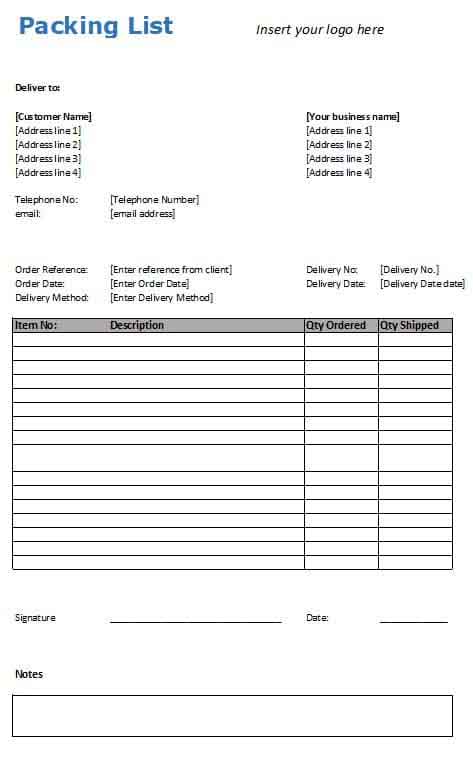
An Export Packing List provides detailed information about the shipment, including the packages, weights, dimensions, and a description of the goods. It is similar to a commercial invoice but focuses on the packaging details.
Customs officials use this document to verify the shipment’s contents and the freight forwarder to create the bill of lading. It is an essential part of import-export documentation, ensuring that all parties have a clear understanding of what is being shipped.
✅Detailed List of Items: This list shows the weight, size, and packaging type for each item. It needs to match what’s written on the Commercial Invoice and Bill of Lading.
✅Check and Confirm: Customs officials use the Export Packing List to check that the shipment matches the documents. It also helps them make sure all items are packed safely.
✅Helping with Cargo Handling: Freight forwarders use this document to help properly handle and store the goods during transportation. It organizes the shipment and helps prevent damage.
Common Mistake: A vague item description like “stainless steel utensils” is a classic way to trigger a customs hold. Officials need to know exactly what’s inside — spoons, knives, forks, a boxed set — because vague descriptions look like an attempt to hide something, even when they’re not. The fix costs nothing: just be as specific as your actual inventory allows.
The Export Packing List is an essential part of import-export documentation, helping to streamline the shipping process and avoid delays.
3. Proforma Invoice (PI)
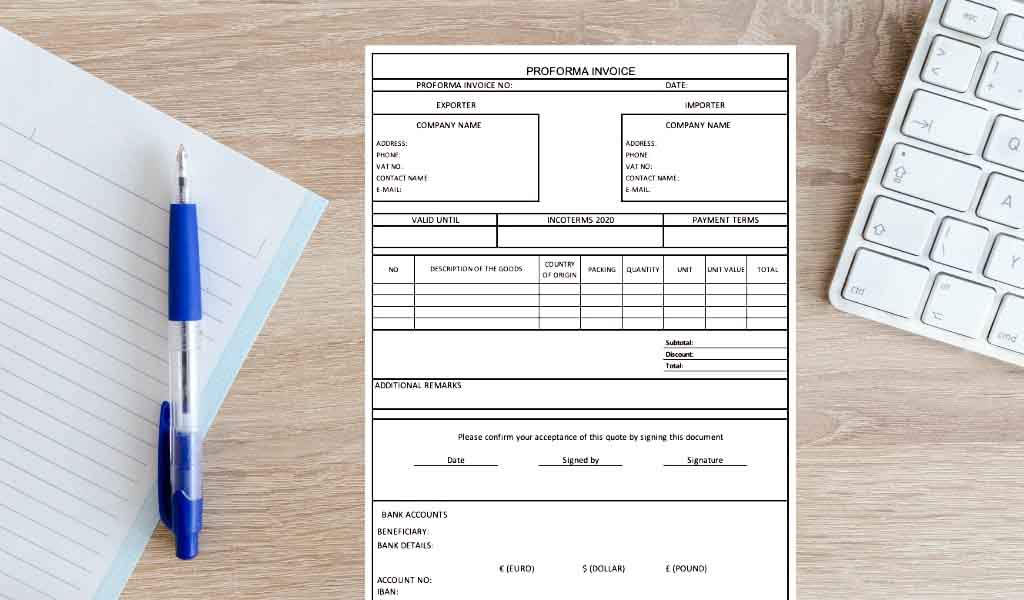
A proforma invoice is a document that a seller sends to a buyer before the sale happens. It shows the estimated costs of the goods or services being offered. This includes details like item descriptions, quantities, prices, and any extra charges like shipping and insurance. While it doesn’t request payment, the proforma invoice is important for several reasons in international shipping:
✅Cost Estimate: The Proforma Invoice shows the estimated costs, like the price of the items, shipping fees, taxes, and any extra charges. This helps the buyer know the total cost before deciding to buy.
✅Getting Trade Financing: Buyers can use the Proforma Invoice to ask for money from their bank or to set up a letter of credit. It contains the details the bank needs to process the payment.
✅Customs Information: Although it’s not an official customs document, the Proforma Invoice can help with customs clearance. It gives basic information to figure out the duties and taxes for the shipment.
✅Agreement Confirmation: The Proforma Invoice serves as a formal quote and helps confirm the agreement between the buyer and seller. It makes sure both sides agree on the terms before the sale happens.
Including a Proforma Invoice in your International Shipping Documents ensures transparency and facilitates smoother transactions in global trade.
4. Commercial Invoice
A commercial invoice is an important document that serves as proof of a sale between a buyer and a seller. It includes key details about the transaction, such as the names and addresses of both parties, a description of the goods, their quantities, and prices per item.
And the total cost of the shipment, as well as the payment terms. This document is necessary for customs clearance because it helps determine the taxes and duties that need to be paid. It is required for all shipments going to other countries.
✅Description of Goods: This part lists what items are being shipped, how much they are worth, and any sale terms like Incoterms. The invoice needs to match what is shown on other shipping papers, like the Air Waybill or BOL.
✅Customs Clearance Purpose: Customs officials look at the Commercial Invoice to figure out how much tax and duty to charge on imports. It is important to get the shipment through customs and make sure it follows all the rules.
✅Payment Terms: This section explains the payment details agreed upon by the buyer and seller, including any credit options or discounts.
Why This Matters: A surprisingly common (and risky) move is labeling commercial goods as “gifts” to try to reduce duty exposure. Customs authorities are well aware of this tactic, and flagging a shipment for suspected undervaluation or misclassification almost always results in a longer delay — and a closer look at every future shipment from that same exporter — than simply declaring the goods accurately in the first place. Misdeclaration isn’t a workaround; it’s a red flag that invites more scrutiny, not less.
The Commercial Invoice is a key element in International Freight Documentation, ensuring that all financial and legal aspects of the shipment are documented.
5. Certificate of Origin (COO)
A Certificate of Origin (COO) certifies the country where the goods were manufactured. This document is crucial for determining the applicable tariffs and duties. Some countries have preferential trade agreements that offer reduced tariffs for goods from certain origins. The COO ensures that the shipment qualifies for these benefits, making it a vital part of international freight documentation.
✅Proof of Origin: A Certificate of Origin (CO) is a document that shows where goods come from. It is usually given by a chamber of commerce or trade group.
✅Impact on Tariffs and Duties: Different countries have trade agreements that can change how much tax (tariffs) is applied to goods based on where they are from. The Certificate of Origin helps make sure the right tax is charged and that the goods get any special benefits.
✅Customs Compliance: Customs officials in the importing country often need this document to make sure the goods follow all the import rules.
Quick Stat: Free Trade Agreements can reduce tariffs to zero on qualifying products — but only if you have a valid Certificate of Origin to prove it. In the U.S. alone, 77.4% of eligible imports successfully claimed FTA preferential rates in 2024, according to trade data — meaning the businesses without proper documentation are leaving real money on the table. The size of the savings depends entirely on the product and trade agreement, but for many goods, the gap between the standard rate and the preferential rate is substantial enough to make the paperwork well worth it.
For businesses involved in international trade, the Certificate of Origin is an indispensable part of International trade documents.
6. Letter of Credit (LC)
The letter of credit is a document issued by a bank that guarantees payment to the seller upon presentation of the required documents. It is a common method of payment in international trade, as it provides security for both the buyer and the seller. The letter of credit is mandatory for certain types of transactions, such as those involving large sums of money or high-risk goods.
7. Bill of Lading (BOL)
The Bill of Lading (BOL) is one of the most important international shipping documents. It’s a contract between the shipper and the carrier that serves as a receipt for the goods, including details such as the shipping route, mode of transportation, and handling instructions.
There are two main types of BOLs: negotiable and non-negotiable. A negotiable BOL can be transferred to a third party, while a non-negotiable BOL cannot. The BOL is a mandatory document for all international ocean shipments, regardless of cargo type.
Fun Fact: According to the International Chamber of Shipping, around 90% of world trade is carried by the international shipping industry. That means if your goods are traveling by ocean, the BOL is non-negotiable.
✅Contract of Carriage: The BOL is an agreement between the person sending goods (shipper) and the company moving the goods (carrier). It explains how and under what rules the goods will be transported by ship.
✅Receipt of Goods: The BOL acts like a receipt, showing that the carrier has received the goods. It includes information like what the goods are, how many there are, and where they are going.
✅Document of Title: One of the most important jobs of the Bill of Lading is that it proves ownership of the goods. The person who has the original BOL can claim the goods when they reach their destination, which means the BOL can be transferred to someone else.
Why This Matters: Losing the original BOL is one of the most expensive paperwork mistakes in shipping — because unlike most documents, a negotiable BOL can’t simply be reprinted on request. Without it, the carrier has no way to confirm who’s legally entitled to the cargo, and will refuse to release the goods until the issue is resolved. That typically means a multi-week delay and mounting storage or demurrage fees while a replacement process (which varies by carrier and can involve an indemnity bond) plays out. This is exactly why high-volume shippers increasingly prefer telex release or electronic BOLs where the carrier supports them — it removes the “lost paper document” risk entirely.
The BOL is central to International Shipping Documents, especially in ocean freight, where it ensures that the transaction is secure and legally sound.
Read: Ocean Freight Logistics Explained: The Ultimate Guide
8. Insurance Certificate
The insurance certificate is a document that provides proof of insurance coverage for the goods being shipped. This document is mandatory for certain types of shipments, such as those involving high-value goods or goods susceptible to damage during transit. The insurance certificate may be issued by the exporter’s own insurance company or by a third-party insurance provider.
✅The Insurance Certificate shows what is covered, protecting goods from damage, theft, and loss during shipping.
✅You need the Insurance Certificate to file a claim if anything goes wrong while the items are in transit.
✅Having this certificate gives both the buyer and seller peace of mind, knowing their goods are insured against unexpected issues.
The Real Cost of Skipping Insurance: Under international carriage conventions, a carrier’s liability for lost or damaged cargo is capped — often at a small fraction of what the goods are actually worth. For a high-value shipment like electronics, branded goods, or designer products, that liability cap can mean recovering only a few hundred dollars on a shipment worth tens of thousands. Cargo insurance is what actually covers the gap between what the carrier is legally required to pay and what your goods are genuinely worth — which is exactly why it’s considered non-negotiable for high-value freight, not an optional extra.
The Insurance Certificate is a vital part of International Freight Documentation, ensuring that all parties are protected against potential losses.
9. Air Waybill (AWB)
An air waybill is a critical document for air freight. It serves as a receipt and a contract between the shipper and the airline. The air waybill includes details like shipment weight, dimensions, and any special handling instructions.
✅A Contract of Carriage: This is an agreement between the person sending the goods (the shipper) and the company that will transport them (usually an airline). It explains the rules and details about how the goods will be moved from where they start to where they need to go.
✅A Receipt: This is a paper that proves the airline has accepted the goods for shipping. It includes important details about who is sending the items, who is receiving them, and a description of what the items are.
✅Tracking and Documentation: The Air Waybill has a special tracking number that lets both the sender and the receiver keep an eye on where the shipment is.
Without an Air Waybill, it would be challenging to ensure Shipping Documents Compliance in air transport, making it an indispensable part of International Freight Documentation.
10. Import and export License
An import or export license is an official document issued by a government authority that permits the shipment of specific goods across international borders. These licenses are typically required for goods that are subject to trade restrictions, quotas, or other regulations. Some key points about import and export licenses:
✅Following the Rules: The Import and Export License helps businesses follow the laws of both the sending and receiving countries. It is important for handling special products, like medicines and chemicals, that might have rules about where they can go.
✅Stopping Illegal Trade: This license helps stop the illegal sale of banned or limited items. It makes sure that products meet the safety standards of the country they are going to, which helps avoid legal troubles and fines.
A Common Trap for Electronics Shippers: Lithium batteries are one of the most frequently mishandled categories in international shipping, because they’re classified as dangerous goods under IATA and IMO regulations and often require specific permits, packaging certifications, and labeling depending on the destination country. Shippers who aren’t aware of this — especially first-time exporters of electronics, power banks, or battery-powered devices — frequently have shipments rejected or returned at the border, losing the original freight cost in the process. If your product contains a battery of any kind, confirming the destination country’s requirements before booking is essential, not optional.
Some countries require import licenses before allowing certain products to enter. This is particularly common for food, pharmaceuticals, and high-value goods.
The Import and Export License in your International Shipping Documents ensures that your goods move smoothly across borders while complying with all legal and regulatory requirements.
Bonus Document: The Customs Declaration.
A Customs Declaration is a formal document submitted to customs authorities upon importing or exporting goods. It provides detailed information about the shipment, including product descriptions, quantities, values, and tariff codes. Accurate and complete customs declarations are crucial for smooth clearance and avoiding penalties.
Quick Reference: Documents by Shipping Mode
Ocean Shipping Documents
✅Bill of Lading (BOL): This key document for ocean shipping acts.
✅Commercial Invoice: This tells the value and details of the goods.
✅Packing List: This lists everything inside the shipment.
✅Certificate of Origin: This shows where the goods were made.
✅Certificate of Conformity: Confirms the goods meet standards.
✅License: If needed, this allows you to ship specific goods.
✅Inspection Certificate: This shows the goods have been checked.
✅Insurance Certificate: Protects your goods from damage or loss.
Air Shipping Documents
✅Air Waybill: Similar to a bill of lading, but for air shipping.
✅Commercial Invoice: Same as for ocean shipping.
✅Packing List: Same as for ocean shipping.
✅Certificate of Origin: Same as for ocean shipping.
✅Certificate of Conformity: Same as for ocean shipping.
✅License: Same as for ocean shipping.
✅Inspection Certificate: Same as for ocean shipping.
✅Insurance Certificate: Same as for ocean shipping.
Final Thoughts (Or, Avoid My Mistakes!)
I can’t tell you how many times I’ve seen businesses suffer because of missing or incorrect shipping documents. Trust me, you don’t want to learn the hard way! Always double-check your paperwork, work with experienced shipping partners, and stay updated on international trade regulations.
And if you’re ever in doubt, just imagine your shipment sitting in a customs warehouse, gathering dust while you scramble to fix a documentation issue. Not fun, right?
Need help in any shipping from China to Bangladesh? Contact us—We’d love to help you!
FAQ
What documents do I need to ship internationally?
At minimum, every international shipment needs a Commercial Invoice, a Packing List, and either a Bill of Lading (for ocean freight) or an Air Waybill (for air freight). Beyond these core three, you’ll often also need a Certificate of Origin, an Insurance Certificate, and — depending on the goods and destination country — an Import or Export License or a Certificate of Conformity. The exact combination depends on what you’re shipping, where it’s going, and how it’s being transported. If in doubt, your freight forwarder should confirm the full document list before your cargo leaves the origin port.
What’s the difference between a Bill of Lading and an Air Waybill?
Both documents serve the same basic purpose — they’re a contract of carriage and a receipt for your goods — but they’re used for different transport modes and have one critical legal difference. A Bill of Lading (B/L) is used for ocean freight and can be negotiable, meaning it acts as a document of title: whoever holds the original B/L can claim the goods at destination. An Air Waybill (AWB) is used for air freight and is always non-negotiable — it’s a receipt and contract, but it doesn’t transfer ownership the way a B/L can. In practice, this means B/Ls require more careful handling, since losing the original can delay your cargo release, while AWBs are simpler to manage but offer less flexibility for transactions involving letters of credit.
Do I need a Certificate of Origin for every shipment?
Not always, but it’s required far more often than many first-time importers expect. You’ll typically need a Certificate of Origin when your destination country offers preferential tariff rates under a trade agreement, when the importing customs authority specifically requests proof of where goods were manufactured, or when your product falls under origin-specific trade restrictions. Even when it’s not strictly mandatory, including a Certificate of Origin can help you qualify for reduced duty rates and speeds up customs processing, since it removes one common reason for manual review. When in doubt, ask your freight forwarder whether your specific product and destination combination requires one.
What happens if a shipping document is missing or incorrect?
Missing or incorrect documentation is the single most common cause of customs delays in international shipping. At minimum, expect your shipment to be held until the issue is resolved — which can mean days or weeks of storage fees piling up at the port or airport. In more serious cases, customs may flag the shipment for inspection, request additional verification, or in rare cases reject the shipment entirely. The fix is almost always the same: contact your freight forwarder or customs broker immediately, provide the correct or missing document, and in most cases clearance can resume within a few business days. Prevention is far cheaper than the fix — always cross-check that your Commercial Invoice, Packing List, and Bill of Lading or Air Waybill all describe the exact same goods, quantities, and values before your cargo ships.
Can I prepare international shipping documents myself, or do I need a freight forwarder?
Technically, you can prepare most shipping documents yourself — the Commercial Invoice, Packing List, and Proforma Invoice are all things an experienced importer can draft without help. However, documents like the Bill of Lading and Air Waybill are issued by the carrier or freight forwarder, not the shipper, so you can’t generate those independently. For first-time importers, or anyone shipping regularly across multiple product categories, working with a freight forwarder is strongly recommended — a single inconsistency between your invoice, packing list, and transport document is one of the most common reasons shipments get held at customs, and an experienced forwarder catches these errors before the cargo ever leaves the origin port.
Can FR Logistics handle all the required documentation for my shipment?
Absolutely! At FR Logistics, we provide a comprehensive service that includes preparing and managing all necessary shipping documents on your behalf. We ensure that your shipment complies with international regulations and reaches its destination without any delays.
Do I need an Import and Export License for my shipment?
Yes, certain goods require an Import and Export License to ensure compliance with local regulations and international trade laws. FR Logistics can assist you in Manage the necessary licenses, making the process seamless and hassle-free.
What types of goods can you ship using your door-to-door service?
We can ship a wide range of goods using our door-to-door service, including machinery, electronics, consumer goods, and more. Our team is equipped to handle various cargo types, ensuring that your items are transported safely and efficiently.
How does FR Logistics manage international shipping documentation?
At FR Logistics, we take care of all international shipping documents for our customers. This includes preparing essential documents such as commercial invoices, bills of lading, certificates of origin, and customs declarations. Our expertise ensures that all documentation is accurate and compliant with international regulations, minimizing the risk of delays.
Do I need to prepare any documents myself?
No, our team will handle all documentation on your behalf. You just need to provide us with the necessary information about your shipment.
What is your delivery time?
Delivery times vary depending on the destination and shipping method chosen. We provide estimated delivery times during the booking process.
Author’s Profile