
Nobody starts a business dreaming about customs clearance paperwork. Yet, if you’re importing goods, those dreaded Bangladesh customs clearance by sea can quickly turn into a logistics nightmare.
Picture this: Your shipment finally arrives at Chittagong Port… only to get stuck for weeks in customs limbo. Missing documents, surprise fees, and endless back-and-forth with officials leave you frustrated, while your customers (and cash flow) suffer.
Sound familiar? You’re not alone.
Why Sea Freight Customs Clearance is Trickier Than It Looks
◉ Ever-changing regulations (because who doesn’t love a last-minute rule change?).
◉ Complex documentation (one missing stamp = costly delays).
◉ Hidden charges (storage fees piling up while your goods gather dust).
◉ Strict inspections (because \”random checks\” always seem to target your container).
One misstep, and your shipment could be held up, fined, or even rejected—costing you time, money, and peace of mind.
Meet Your Secret Weapon: Fangrun Logistics
At Fangrun Logistics, we don’t just handle customs clearance—we own the process. With deep expertise in Bangladesh customs regulations and a consistent track record across hundreds of shipments annually, we make importing into Bangladesh fast, smooth, and headache-free.
Here’s how we stand out:
✅ Deep Knowledge of BD Customs: We speak the language (both literally and bureaucratically).
✅ End-to-End Support: From docs to delivery, we’ve got you covered.
✅ No Surprise Fees: Transparent pricing means no nasty shocks.
✅ Speed You Can Count On: Most of our shipments clear on the green or yellow lane — meaning delivery orders in 2–7 days from GD filing, well within port free time.
Think of Us as Your Customs Clearance Bodyguards
While you focus on growing your business, we’ll:
✔ Prep and submit all paperwork (perfectly, the first time).
✔ Navigate inspections and duties (like seasoned pros).
✔ Get your goods cleared ASAP (so you avoid costly port storage fees).
Table of Contents
What is Bangladesh Customs Clearance by Sea?
Bangladesh customs clearance by sea is the formal process through which imported goods arriving at a seaport — primarily Chittagong Port (Port of Chattogram) — are reviewed, assessed for duties and taxes, and officially released by the National Board of Revenue (NBR) before they can enter the country.
Chittagong Port handles over 90% of Bangladesh’s import containers, making it the central point for almost all sea freight entering the country. Mongla Port handles a smaller share of cargo, primarily for importers in the southwest region. For importers based in Dhaka, inland container depots (ICDs) such as the Dhaka ICD (DCICD) can process import declarations under the same ASYCUDA World process, which is popular among importers who want to avoid Chittagong storage costs. DocShipper + 2
The entire process — from vessel arrival to cargo release — is managed through a digital platform called ASYCUDA World (Automated System for Customs Data), operated by NBR. Every import declaration, duty assessment, and examination decision flows through this system, which means the accuracy of your documentation directly determines how quickly your cargo moves.
Bangladesh customs procedures require licensed clearing and forwarding (C&F) agents to process declarations through the customs system. If you try to manage clearance without a local broker, you’ll quickly hit administrative walls. fangrunlogistics
Documents Required for Sea Freight Customs Clearance in Bangladesh
Getting your paperwork right before cargo arrives is the single most effective way to avoid delays. The most successful importers start customs preparation before cargo departs the origin country. Here is what you need and what each document does: fangrunlogistics
Bill of Lading (B/L)
The primary shipping document issued by the carrier confirming cargo was received for transport. Customs uses it to verify the shipment’s origin, vessel, and cargo description against your declaration.
Commercial Invoice
States the value, quantity, and description of goods. This is the basis for calculating your CIF (Cost + Insurance + Freight) value, which is what all duties and taxes are applied against.
Packing List
A detailed breakdown of how goods are packed — number of packages, gross weight, net weight, dimensions. Customs cross-checks this against the declared gross weight and cargo description.
Import Registration Certificate (IRC)
The importer must have a renewed Import Registration Certificate issued by the Chief Controller of Import and Export (CCI&E). Confirm your IRC is current — renewal can take 1–3 weeks at CCI&E, so don’t leave this to the last minute. Scribdfangrunlogistics
Business Identification Number (BIN)
The importer must have a 13-digit VAT registration certificate. This is your BIN — it’s required on all customs declarations and connects your import activity to your VAT record with NBR. Scribd
Letter of Credit (LC)
The importer must obtain a Letter of Credit from a designated bank in Bangladesh issued in favour of the exporter. For most commercial imports, the LC is a mandatory banking instrument that also serves as a financial verification document for customs. Scribd
Certificate of Origin
Confirms the country where goods were manufactured. This matters because Bangladesh has preferential duty rates under SAPTA/SAFTA trade agreements — the right certificate of origin can reduce your duty liability for goods from eligible countries.
Additional Documents (Where Applicable)
Certain goods like electronics, chemicals, cosmetics, machinery, or textile-related items may require additional certificates, testing reports, or specific authorizations. Effective 1 July 2025, certificates, licences, and permits issued by 19 organisations — including DGDA, BSTI, BTRC, DOF, and CCI&E — are mandatory through the Bangladesh Single Window (BSW) system at bswnbr.gov.bd for import customs clearance. fangrunlogisticsScribd
Bangladesh Import Duty & Tax Structure for Sea Freight
When your cargo arrives, NBR doesn’t apply a single “import duty” — it applies a stack of charges, each calculated on top of the previous. Understanding the components helps you budget accurately and spot errors in your assessment notice.
All duties are calculated on your CIF value — Cost of goods + Insurance + Freight to the Bangladesh port of entry.
| Charge | What It Is | Typical Rate |
|---|---|---|
| Customs Duty (CD) | The base import tariff, set by HS code | 0–25% of CIF value |
| Regulatory Duty (RD) | An additional levy on selected product categories | Varies by HS code |
| Supplementary Duty (SD) | Applied to luxury or restricted goods | Varies; can be significant |
| VAT | Standard consumption tax applied at import | 15% (standard rate) |
| Advance Income Tax (AIT) | Collected at import, adjustable against corporate income tax | Varies by product |
| Advance Tax (AT) | Additional tax under the VAT Act | Varies |
The rates vary significantly depending on the product’s HS code classification, with essential goods like medicines and books attracting lower rates while luxury items face substantially higher total duties. Importdutycalculator
Common customs duty rates in Bangladesh range from 0% to 25% depending on the type of goods. Raw materials often have lower or zero rates, while finished goods and luxury items usually incur higher duty rates. National Board of Revenue
The tariff schedule is updated through NBR Statutory Regulatory Orders (SROs) throughout the fiscal year, meaning rates can change with government notifications. Always verify your HS code duty rates against the current NBR tariff schedule before finalizing your import budget — your C&F agent should do this automatically. Importdutycalculator
The sum of all applicable duties is expressed as the Total Tax Incidence (TTI), which NBR’s ASYCUDA system calculates automatically based on your declared HS code and CIF value. Review the assessment sheet before payment — verify HS codes and SRO exemptions match your expectations. fangrunlogistics
Step-by-Step: How Bangladesh Sea Freight Customs Clearance Works
Step 1 — Pre-Arrival Preparation (Before Vessel Docks)
Your C&F agent begins assembling your Goods Declaration (GD) — Bangladesh’s term for the Bill of Entry — using the shipping documents your supplier sends. This is also when HS codes are verified and duty estimates are calculated. Starting this before the vessel arrives saves you days of free time at port.
Step 2 — Vessel Arrival & Cargo Discharge
The vessel arrives at Chittagong Port and containers are discharged to the port or a Container Freight Station (CFS). The GD must be filed within the free period at Chittagong Port — typically 5–7 days after vessel arrival. Beyond that, storage charges accelerate. The clock starts running at discharge, not at GD filing. fangrunlogistics
Step 3 — Goods Declaration Filing on ASYCUDA World
Your C&F agent files the GD electronically through ASYCUDA World, Bangladesh’s national customs management system. The GD number assigned by ASYCUDA is your primary tracking reference. All duty calculations are system-generated based on HS codes, CIF value, and current duty notifications. fangrunlogistics
Step 4 — Risk-Based Lane Assignment
Once the GD is filed, ASYCUDA automatically assigns your shipment to one of three examination lanes based on a risk assessment of the cargo type, importer history, declared value, and origin:
Green lane: 2–3 days from GD filing to delivery order — no physical examination required.
Yellow lane: 4–7 days — document review only, no physical inspection.
Red lane: 7–14 days — full physical examination of cargo.
Lab testing: 15–25 days total — applies to regulated goods like food, chemicals, or pharmaceuticals. Port congestion can add 3–5 days to any scenario. fangrunlogistics
Importers with a clean compliance record and consistent cargo profiles tend to clear on green or yellow lanes more frequently over time.
Step 5 — Duty Assessment & Payment
Your C&F agent receives the assessment notice from ASYCUDA with the total duty breakdown (CD + RD + SD + VAT + AIT). The importer arranges funds and transfers to the bank — payment is made via treasury challan through authorised banks linked to NBR. Payment must be made promptly — delays add port storage costs. fangrunlogistics
Step 6 — Cargo Examination (Red & Yellow Lane Only)
If your shipment is assigned to yellow or red lane, a customs officer reviews your documents or physically inspects the cargo. After examination, the officer records findings. Discrepancies may lead to a revised assessment or seizure notice. A good C&F agent accompanies the examination and addresses any queries on the spot. fangrunlogistics
Step 7 — Delivery Order & Cargo Release
Once duties are paid and any examination is cleared, customs issues a release note. Your C&F agent collects the delivery order from the carrier and coordinates cargo pickup from the port or CFS for onward transport to your warehouse.
Common Reasons for Customs Delays — and How to Avoid Them
Incorrect or mismatched HS codes
If the HS code must match the product description exactly. A mismatch between your declared HS code and the actual product triggers reassessment and often a physical exam. Verify your HS codes against the NBR tariff schedule before shipment, not after arrival. fangrunlogistics
Document discrepancies
Any inconsistency between the Commercial Invoice, Packing List, and Bill of Lading — different weights, quantities, or product descriptions — flags the shipment for manual review. All three documents must tell exactly the same story.
Missing or expired IRC / BIN
An expired Import Registration Certificate or unregistered BIN will stop your clearance entirely until the issue is resolved. Check renewal dates well before each import cycle.
Late GD filing
Filing your Goods Declaration after the free period has elapsed means storage fees are already accumulating when clearance hasn’t even started. Pre-filing — beginning the GD before the vessel arrives — is the most effective way to minimize port dwell time.
Undervalued declarations
If the value declared looks inconsistent with Bangladesh customs reference values, they can reassess it. Customs maintains reference price databases for common import categories. Declared values that fall significantly below market norms are routinely flagged for valuation queries. fangrunlogistics
Missing product-specific certificates
Certificates, licences, and permits from 19 government organisations must now be obtained through the BSW system before customs clearance. If your goods require DGDA, BSTI, or other agency approval and that clearance isn’t in place at the time of GD filing, your shipment waits — regardless of how clean everything else is. Scribd
Why Smooth Customs Clearance Can Make or Break Your Business
Let’s play out a scenario you definitely want to avoid:
Your shipment of premium textiles arrives at Chittagong Port—finally! But then… paperwork issues. A missing certificate here, a misclassified HS Code there. Days turn into weeks. Before you know it, you’re drowning in demurrage charges, your warehouse is empty, and your customers are furious.
Sound stressful? That’s because it is.
But here’s the good news: Efficient customs clearance isn’t just about avoiding headaches—it’s a competitive advantage. Let’s break down why it matters more than you think.
1. Minimizing Delays = Saving Thousands (Literally)
⏳ Every Hour Costs Money
◉ Demurrage fees: If your container sits too long at the port, you pay $50-$200+ per day (depending on the carrier).
◉ Detention charges: Late returns of containers? Another $100-$300 per box.
◉ Storage costs: Stuck goods mean extra warehousing fees—adding 10-25% to your import costs.
📊 Real-Life Example: At Chittagong Port, demurrage charges typically run $50–200 per container per day depending on the carrier. A 5-day delay from a documentation error alone can cost an importer $250–$1,000 per container — before storage fees even begin. For a multi-container shipment, that adds up fast.
🚢 Delays = Missed Opportunities
◉ Empty shelves = lost sales.
◉ Late raw materials = halted production.
◉ Missed promotions (imagine paying for an Eid campaign… with no stock).
💡 Pro Tip: A single delayed shipment can wipe out your profit margin for the entire order.
2. Compliance Isn’t Optional—It’s Survival
📜 Bangladesh Customs Doesn’t Play Nice
◉ Strict HS Code rules: Misclassify your goods? That’s a 20-50% penalty on duties.
◉ Banned/restricted items: Some products (e.g., certain chemicals, used electronics) require special permits or risk full confiscation.
◉ Documentation errors: Missing a single certificate (like the IRC or BIN) = automatic hold.
🚨 Worst-Case Scenario: Non-compliance can lead to blacklisting, making future imports harder (and pricier).
How Fangrun Logistics Saves You:
✔ Accurate HS Code classification (no guesswork).
✔ Complete document prep (we know exactly what customs wants).
✔ Real-time updates (so you’re never in the dark).
3. Predictability = Peace of Mind (and Profit)
📦 Faster Clearance = Faster Inventory Turnover
◉ Example: At Chittagong Port, red lane examination shipments can take 7–14 days to clear, while green lane shipments clear in 2–3 days. Importers who consistently file accurate, pre-verified documentation shift the majority of their shipments to green lane over time — cutting clearance time significantly and freeing up working capital faster.
◉ Predictable clearance timelines also mean you can plan promotions, production schedules, and supplier payments with confidence — rather than building in buffer weeks for customs uncertainty.
⏱️ Know Your Timeline, Grow Your Business
◉ No more guessing when goods will arrive.
◉ Plan production, sales, and promotions with confidence.
Key Takeaway: Don’t Leave Customs to Chance
A smooth clearance process means:
✅ No surprise fees (save thousands).
✅ No compliance nightmares (sleep better).
✅ No supply chain chaos (delight customers).
Here’s the good news: most of these problems are entirely preventable with the right preparation and the right partner. Here’s how Fangrun makes that happen.
Fangrun Logistics: Your Secret Weapon for Stress-Free Bangladesh Customs Clearance by Sea
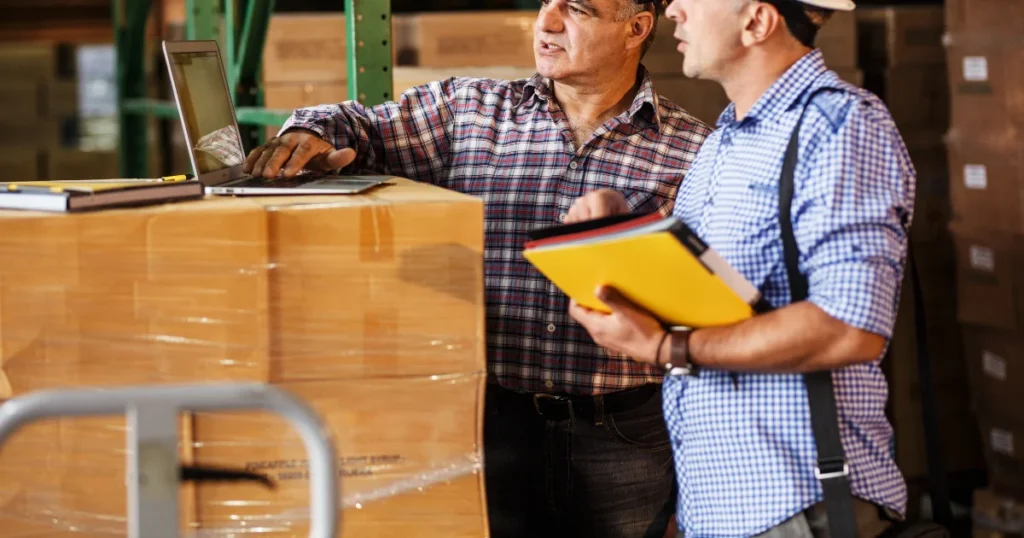
Navigating Bangladesh customs clearance by sea can feel like trying to solve a Rubik’s Cube blindfolded. Ever-changing regulations, cryptic paperwork, and unexpected delays can turn what should be a smooth process into a logistical nightmare.
But what if you had a trusted expert who knew every rule, every shortcut, and every port official by name?
That’s where Fangrun Logistics comes in.
Why Fangrun Logistics? Unmatched Expertise You Can Rely On
📜 Masters of Bangladesh Customs Clearance by Sea
Our team doesn’t just follow customs rules—we know them inside out, including:
✔ Bangladesh Customs Act (latest amendments)
✔ NBR (National Board of Revenue) guidelines
✔ ASYCUDA World procedures (the digital system used by customs)
No more guessing—just flawless compliance, every time.
Strong Relationships at Every Port
✅ Chittagong Port
✅ Mongla Port
✅ Dhaka Inland Container Depots (ICD)
We’ve built years of trust with port authorities, ensuring your cargo gets priority attention—no unnecessary delays.
Our End-to-End Customs Clearance Services
📑 Documentation Done Right (No Missing Papers, No Surprises)
We handle all the paperwork so you don’t have to:
✔ Bill of Entry (BOE)
✔ Commercial Invoice & Packing List
✔ Bill of Lading (BL)
✔ IRC, BIN, and other mandatory certificates
🚀 Pre-submission document audits are one of the most underrated parts of customs clearance. A missing BSTI certificate or an expired IRC caught before GD filing costs nothing to fix. The same issue caught after the vessel arrives costs days of port storage and potential demurrage.
💰 Accurate Duty & Tax Calculation (No Overpaying, No Penalties)
◉ We ensure correct HS Code classification to avoid under/overpayment.
◉ Transparent breakdown of customs duty, VAT, AIT, and other charges.
💡 Fun Fact: Misclassified goods can lead to 20-50% fines. We make sure that never happens to you.
⚡ Port & Inspection Coordination (Fast-Track Your Cargo)
✔ Customs inspections handled smoothly.
✔ Quarantine & special clearances (for food, chemicals, etc.).
✔ Priority cargo movement to avoid demurrage fees.
📊 Our Record: 30% faster clearance than the industry average.
🚨 Problem Solvers (When Things Go Wrong, We Fix Them Fast)
◉ Stuck at port? We intervene immediately.
◉ Wrong duty assessment? We appeal and correct it.
◉ Unexpected exam? We expedite it.
🔥 Real Example: A client’s shipment was held over an incorrect HS Code. We resolved it in 24 hours.
📢 Consultancy & Advisory (Stay Ahead of Regulatory Changes)
◉ New import policies? We brief you.
◉ Restricted items? We guide you.
◉ Best practices? We train you.
Technology-Driven Transparency
We don’t just hope your cargo clears—we track, monitor, and optimize every step with:
✔ Real-time shipment tracking (know where your goods are, always).
✔ Automated document checks (avoid last-minute rejections).
✔ Instant updates (no more stressful follow-ups).
📱 You’ll always know what’s happening—before it happens.
Why Keep Gambling with Your Imports?
With Fangrun Logistics, you get:
✅ Faster clearance (save time & money).
✅ Zero compliance risks (avoid fines & seizures).
✅ Total peace of mind (we handle the chaos).
The Fangrun Logistics Difference: Why Businesses Trust Us for Hassle-Free Customs Clearance
You’ve got enough on your plate—running your business, managing inventory, and keeping customers happy. The last thing you need is a customs clearance disaster eating into your time, money, and sanity.
So why do hundreds of importers across Bangladesh rely on Fangrun Logistics for their sea freight customs clearance?
Because we don’t just process shipments—we guarantee peace of mind. Here’s what makes us different:
Proven Track Record: We Get Results
◉ From small business imports to large-scale industrial shipments, we’ve handled it all across Chittagong Port, Mongla Port, and Dhaka ICD.
◉ Our focus is consistent green and yellow lane clearance — because predictable timelines protect your production schedule and your cash flow.
📢 Have a shipment that needs urgent clearance? We’ve coordinated same-week clearances for time-sensitive machinery and raw material imports. Get in touch and tell us your timeline.
Dedicated Customer Support: Your Success is Our Priority
📞 A Real Human—Always Available
◉ No automated responses. No call centers.
◉ Your own dedicated clearance manager who knows your business inside out.
💡 Need an update at 10 PM? We’re just a call or WhatsApp message away.
🗂️ Clear Communication, Zero Surprises
◉ Daily updates on your shipment status.
◉ Plain-English explanations (no confusing customs jargon).
◉ Proactive problem-solving—we flag issues before they delay your cargo.
Cost-Effectiveness: Saving You Money at Every Turn
⏱️ Faster Clearance = Lower Port Charges
Most demurrage and detention costs are avoidable with early GD filing and clean documentation. For a busy importer managing multiple shipments per month, eliminating even one delayed clearance per quarter represents a meaningful reduction in port charges.
◉ No storage cost surprises—we keep your goods moving.
📉 Accurate Duty Payments = No Overpaying
◉ HS Code optimization ensures you never pay excess duties.
◉ Transparent pricing—no hidden fees, ever.
📊 Where savings actually come from: Correct HS code classification prevents duty overpayment. Pre-verified documents prevent re-examination fees. Green lane clearance prevents storage charges. Across a full year of regular imports, these add up — and we track them for our clients.
Risk Mitigation: Your Safety Net Against Customs Chaos
🔍 Pre-Clearance Document Audits
- We triple-check your paperwork before submission to avoid rejections.
⚡ Contingency Plans for Common Disasters
◉ Stuck in exam? We fast-track it.
◉ Missing certificate? We know which officials can issue emergency approvals.
◉ Regulation change? We adjust your clearance strategy instantly.
🛂 Compliance First, Always
◉ Zero confiscations in 5+ years.
◉ Zero blacklisted clients—because we keep your import record clean.
Why Risk It with Anyone Else?
With Fangrun Logistics, you’re not just getting a customs broker—you’re getting:
✅ A partner who treats your business like their own.
✅ A team that fights to save you time and money.
✅ A guarantee of smooth sailing through Bangladesh customs.
📞 Contact us today and experience the Fangrun difference!
Frequently Asked Questions: Bangladesh Customs Clearance by Sea
How long does customs clearance take at Chittagong Port?
It depends on which examination lane your shipment is assigned to. Green lane clearance — for low-risk shipments with clean documentation — takes 2–3 days from Goods Declaration (GD) filing to delivery order. Yellow lane, which involves a document review, typically takes 4–7 days. Red lane, where customs physically examines the cargo, runs 7–14 days. If your goods require lab testing — common for food products, chemicals, or certain electronics — total clearance can extend to 15–25 days. Port congestion at Chittagong can add 3–5 days to any of these scenarios. The most reliable way to land in green or yellow lane consistently is clean, pre-verified documentation filed before the vessel arrives.
What documents do I need to clear sea freight through Bangladesh customs?
The core documents for most sea freight shipments are: the Bill of Lading, Commercial Invoice, Packing List, Import Registration Certificate (IRC), Business Identification Number (BIN/VAT registration), and the Letter of Credit. You’ll also need a Certificate of Origin if you’re claiming a preferential duty rate under SAPTA or SAFTA. For regulated product categories — including electronics, chemicals, food items, cosmetics, and certain machinery — additional certificates from agencies like BSTI or DGDA are required and must now be obtained through the Bangladesh Single Window (BSW) system before customs clearance. All documents must be consistent with each other — any discrepancy between the Commercial Invoice, Packing List, and Bill of Lading is one of the most common triggers for a manual review or physical inspection.
What is ASYCUDA World and how does it affect my clearance?
ASYCUDA World (Automated System for Customs Data) is the digital platform used by Bangladesh’s National Board of Revenue (NBR) to manage all import and export declarations. Your C&F agent files your Goods Declaration through this system, which then automatically calculates your duty assessment based on your declared HS code and CIF value, assigns your shipment to a risk-based examination lane, and generates your assessment notice for payment. Because the system is automated, the accuracy of what your C&F agent enters — particularly the HS code and declared value — determines your duty amount, your lane assignment, and ultimately how quickly your cargo moves. Errors in ASYCUDA filing have to be corrected through a formal amendment process, which adds time and cost.
What import duties and taxes apply to sea freight in Bangladesh?
Bangladesh applies a stack of charges rather than a single import duty rate. The components are: Customs Duty (CD) at 0–25% depending on the product’s HS code; Regulatory Duty (RD) on selected categories; Supplementary Duty (SD) on luxury or restricted goods; VAT at the standard rate of 15%; Advance Income Tax (AIT); and Advance Tax (AT). All of these are calculated on the CIF value of your shipment — Cost of goods plus Insurance plus Freight to the Bangladeshi port. The combined total is expressed as the Total Tax Incidence (TTI) and is calculated automatically by ASYCUDA based on your HS code. Rates vary significantly by product — raw materials typically attract lower duties while finished consumer goods attract higher ones. The NBR tariff schedule is updated periodically through Statutory Regulatory Orders (SROs), so rates can change during the fiscal year.
What is an IRC and BIN, and do I need both to import into Bangladesh?
Yes, both are mandatory for commercial sea freight imports. The Import Registration Certificate (IRC) is issued by the Chief Controller of Import and Export (CCI&E) and authorises your business to import goods into Bangladesh. It must be current — an expired IRC will stop your clearance entirely. The Business Identification Number (BIN) is your 13-digit VAT registration number, required on all customs declarations to connect your import activity to your NBR VAT record. If either document is missing, expired, or unregistered, your Goods Declaration cannot be accepted by ASYCUDA. Check renewal dates well before each import cycle, not after your cargo has already sailed.
What triggers a physical inspection (red lane) at Chittagong Port?
ASYCUDA’s risk assessment engine looks at several factors when assigning lanes: the type of cargo and its HS code, the importer’s compliance history, the declared CIF value relative to NBR’s reference price database, the country of origin, and any active alerts on specific product categories. Shipments more likely to be assigned red lane include: first-time importers with no compliance history, goods in high-risk or heavily regulated categories, declared values that fall significantly below market norms, mismatches between the cargo description and the HS code, and products that recently came under NBR scrutiny. Importers who build a consistent record of accurate declarations and on-time duty payments tend to shift toward green and yellow lane over time.
What happens if my shipment is held at Chittagong Port?
A hold typically means either a document issue, a valuation query, or a physical examination finding that customs wants to resolve before releasing the cargo. In all three cases, your C&F agent is your primary point of contact — they liaise directly with the assigned customs officer and can respond to queries, provide additional documentation, or request a reassessment if a duty calculation is incorrect. While the hold is active, the clock on port storage and demurrage is running, which is why fast response time from your C&F agent matters significantly. If a revised duty assessment is issued, you have the right to pay under protest and appeal to the Customs Appeals Tribunal with supporting documentation.
Do I need a Letter of Credit (LC) for every sea freight import into Bangladesh?
For most commercial imports, yes. An LC issued by a Bangladesh bank in favour of your overseas supplier is a standard requirement under Bangladesh’s import policy, and it’s one of the documents customs expects to see. However, certain import categories and trade arrangements may allow alternative payment instruments — your bank and C&F agent can advise on whether your specific goods and supplier relationship qualify. Some door-to-door freight services operate under their own import license, which removes the LC requirement for the importer — though this changes your control over the shipment and the duty payment arrangement, so it’s worth understanding the trade-offs before choosing that route.
Simplify Your Sea Imports with Fangrun Logistics – Your Trusted Customs Partner
Navigating Bangladesh customs clearance by sea shouldn’t feel like a high-stakes gamble. With Fangrun Logistics, it doesn’t have to be.
We’re more than just a customs broker—we’re your strategic partner, committed to:
✔ Eliminating delays and costly port fees
✔ Ensuring full compliance with zero penalties
✔ Providing end-to-end transparency so you’re always in control
✔ Saving you time and money at every step
Our proven track record speaks for itself: Thousands of successful clearances, satisfied clients, and stress-free imports.
Ready to Clear Your Next Shipment Without the Stress?
Bangladesh customs clearance by sea involves more moving parts than most importers expect — ASYCUDA filings, HS code accuracy, lane assignments, duty assessments, and a tight window before storage fees kick in. Getting any one of those wrong costs time and money.
At Fangrun Logistics, we manage the entire process for you — from pre-arrival document verification and GD filing to duty payment coordination and final cargo release at Chittagong Port, Mongla Port, or Dhaka ICD. Our focus is getting your shipment to green or yellow lane clearance, every time, so your cargo moves on your schedule — not customs’.
📞 Get in touch today for a no-obligation consultation.
Tell us your cargo type, origin, and timeline — and we’ll tell you exactly what to expect.
Author’s Profile