
If you’ve ever received an air freight invoice and spotted a line item that reads “HAWB charge” — and your first reaction was another fee? — you’re not alone. Most importers shipping from China to Bangladesh or the USA see this charge and have no idea what it covers or whether they’re being overcharged.
Here’s the good news: the House Airway Bill (HAWB) charge is not a junk fee. It’s a legitimate, important part of air freight shipping — and once you understand what it is, how much it should cost, and what you’re actually getting for the money, it stops being a mystery and starts making complete sense.
This guide covers everything: the definition, the HAWB vs. MAWB difference, what the document contains, how much it costs, and how to make sure you never overpay.
Table of Contents
What Is a House Airway Bill (HAWB) Charge?
The Simple Definition
A House Airway Bill (HAWB) charge is the fee your freight forwarder charges for preparing, issuing, and processing the House Airway Bill document — the official receipt and contract that covers your specific air freight shipment.
Think of it this way: when your freight forwarder picks up your goods, consolidates them with other cargo, and loads them onto an aircraft, they create a paper trail that ties your shipment to you specifically. The HAWB is that paper trail. The HAWB charge is simply the cost of creating and managing it.
Without this document, there is no legal proof that your goods belong to you — which matters enormously at customs.
Who Issues the HAWB?
The freight forwarder issues the HAWB — not the airline. This is one of the most commonly misunderstood points in air freight. When you book a shipment through a forwarder, they handle all communication with the airline on your behalf. The airline issues a separate document (the Master Airway Bill, or MAWB) to the freight forwarder — but you, as the importer or shipper, receive the HAWB.
This means the HAWB is the document you’ll use to track your cargo, clear customs, and resolve any disputes.
Is the HAWB the Same as an Air Waybill?
Not exactly. “Air Waybill (AWB)” is the general term for any airway bill used in air freight. There are two specific types:
- HAWB (House Airway Bill): Issued by the freight forwarder to the shipper or consignee
- MAWB (Master Airway Bill): Issued by the airline to the freight forwarder
So every HAWB is an airway bill, but not every airway bill is a HAWB. When your forwarder says “airway bill,” they usually mean the HAWB — the one that applies to your individual shipment.
Safe and Cost-effective Ocean Freight Service from China to Bangladesh
HAWB vs. MAWB — What’s the Difference?
This is one of the most searched questions in air freight, and for good reason. The two documents look similar but serve very different purposes.
Who Issues Each Document?
| HAWB | MAWB | |
|---|---|---|
| Issued by | Freight forwarder | Airline (or its agent) |
| Issued to | Shipper / Consignee | Freight forwarder |
| Covers | Your individual shipment | The entire consolidated cargo load |
| Used for tracking by | Importer/exporter | Freight forwarder |
| Linked to | The MAWB number | The flight and airline |
Which One Do You Receive as an Importer?
If you’re importing goods from China — whether to Bangladesh or the USA — you will almost always receive the HAWB. Your freight forwarder handles the airline relationship and holds the MAWB on your behalf. What you get is the HAWB, which is your direct contract with the forwarder.
This is the document you’ll hand to customs, use to file insurance claims, and use to trace your goods if anything goes wrong in transit.
Comparison at a Glance
| Feature | HAWB | MAWB |
|---|---|---|
| Who issues it | Freight forwarder | Airline |
| Who receives it | You (shipper/consignee) | Freight forwarder |
| Document relationship | Child document | Parent document |
| Used for customs | Yes | Rarely (by forwarder) |
| Tracking | With your forwarder | With the airline |
What Information Does an HAWB Contain?
A properly issued HAWB is a detailed, legally binding document. Here’s what you’ll find on it.
Shipper and Consignee Details
Every HAWB clearly identifies:
- Shipper: The name, address, and contact of the exporter in China (or wherever your goods originate)
- Consignee: Your name, company, address, and contact information as the receiver
- Notify party: Sometimes a customs broker or third party who needs to be alerted when the shipment arrives
These details must match your commercial invoice and packing list exactly. Discrepancies cause customs delays.
Shipment Details
This section is the core of the document and includes:
- Total number of pieces/packages
- Gross weight and dimensions
- Description of goods
- Declared value
- HS (Harmonized System) commodity codes
- Any special handling requirements (hazardous, fragile, temperature-sensitive, etc.)
Accurate shipment details are critical. Errors here are one of the leading causes of customs holds and documentation fees — IATA data shows documentation mistakes contribute to over 20% of air freight delays.
Freight Charges and Terms
The HAWB also outlines the financial and legal terms of your shipment:
- Freight charges: What you’re paying for the air transport
- Prepaid vs. collect: Whether charges are paid at origin or destination
- HAWB charge: The forwarder’s fee for issuing this document
- Terms of carriage: Who is liable for what if goods are damaged, lost, or delayed
- Additional surcharges: Fuel surcharges, security fees, handling fees
Always review this section carefully. If any charge isn’t explained, ask your forwarder before signing off.
HAWB Number — How to Use It for Tracking
Every HAWB has a unique reference number assigned by your freight forwarder. This number is your primary tool for tracking your air shipment. You can:
- Contact your forwarder and quote the HAWB number to get a status update
- Use the forwarder’s online tracking portal (if available) with the HAWB number
- Share the HAWB number with your customs broker so they can prepare clearance documents in advance
Note: The HAWB number is different from the MAWB number. Both exist, but you’ll primarily work with the HAWB number. The MAWB number is what the airline uses — your forwarder manages that side.
Don’t forget to check our air freight services from China to Bangladesh and from China to the USA
How Much Is the HAWB Charge?
Typical HAWB Fee Range
The HAWB charge typically falls between $10 and $50 per shipment, though it can vary. For common trade lanes relevant to FR Logistics’ clients:
- China to Bangladesh: Expect $15–$35 per HAWB, depending on the forwarder and shipment complexity
- China to USA: Often $20–$50, reflecting higher documentation and compliance requirements
These are per-shipment fees — not per kilogram. So whether you’re shipping 50 kg or 500 kg, the HAWB charge is usually fixed.
Factors That Affect the HAWB Charge
Several variables influence what your forwarder charges:
- Type of goods: Special cargo (dangerous goods, perishables, pharmaceuticals) requires additional documentation, which increases the fee
- Destination country regulations: Some countries have stricter import documentation requirements, adding complexity and cost
- Freight forwarder’s pricing model: Premium forwarders may charge more; budget forwarders may charge less but cut corners elsewhere
- Shipment complexity: Multiple pieces with different HS codes, split deliveries, or unusual dimensions all take more time to document
- Volume of business: High-frequency shippers often negotiate lower rates
Bundled vs. Separate HAWB Fees
Here’s something many importers don’t realize: some freight forwarders bundle the HAWB charge into their all-in freight rate, while others itemize it separately on your invoice. Neither approach is inherently dishonest — but transparency matters.
Always request a line-item breakdown of your freight invoice. If a forwarder quotes you a single lump sum, ask them to split it out: freight charge, fuel surcharge, HAWB charge, destination handling, customs brokerage, etc. This way you can compare apples to apples when evaluating different forwarders.
Transformative Consolidation Services from China to Bangladesh
Why the HAWB Charge Is Worth Paying
Proof of Ownership and Customs Clearance
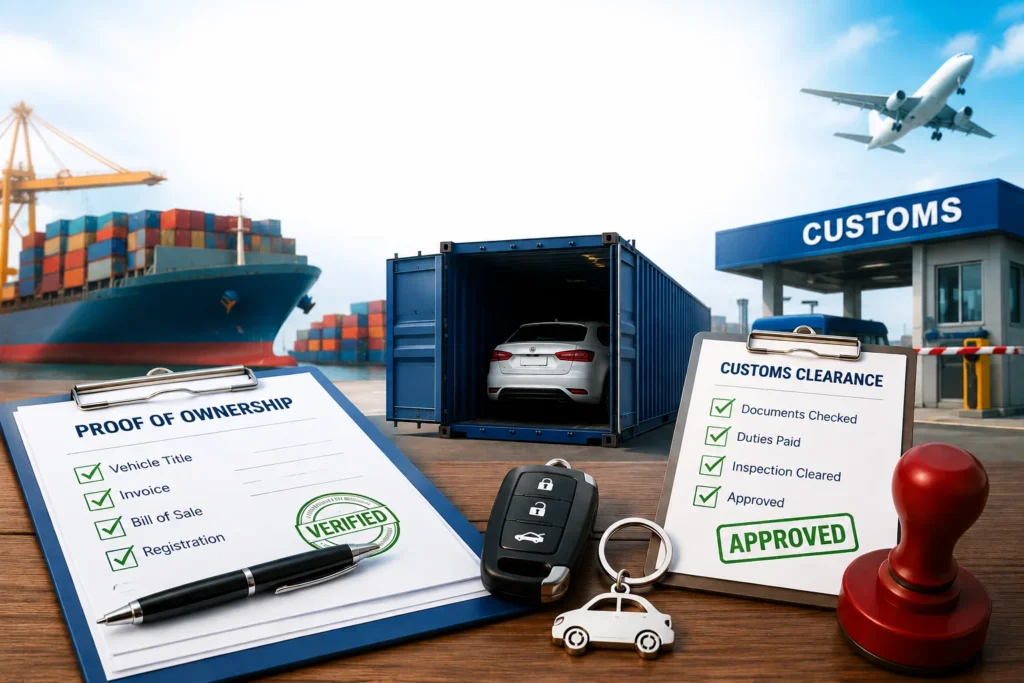
The HAWB is your legal proof that the cargo belongs to you. Without it, customs authorities at the destination cannot confirm ownership — which means your shipment can be held, delayed, or even seized pending investigation.
A real example: a business importing electronics from Shenzhen once received a shipment where the HAWB was missing due to a clerical error on the forwarder’s side. The cargo sat at the port for four days while documentation was sorted out. Storage fees, demurrage charges, and the cost of expedited customs brokerage added up to more than the original HAWB charge would have been — many times over.
The HAWB charge is cheap insurance compared to what a documentation failure costs.
Cargo Tracking Throughout Transit
Your HAWB number is your tracking tool from the moment your goods leave the origin warehouse until they’re delivered. For time-sensitive shipments — especially air freight, where speed is the entire point — being able to track your cargo in real time is not optional. The HAWB makes that possible.
Legal Protection for the Shipper
The HAWB is a binding contract between you and the freight forwarder. It defines:
- The forwarder’s responsibilities during transit
- Their liability limits if goods are damaged or lost
- The agreed terms under which your cargo is accepted
If something goes wrong — damaged goods, a missing package, a misrouted shipment — the HAWB is the document your insurance company and legal counsel will refer to. Without it, your recourse is extremely limited.
How to Avoid Overpaying for HAWB Charges
Always Ask for a Fee Breakdown
Never accept a freight quote that doesn’t itemize every charge. Ask your forwarder specifically: “Is the HAWB charge included in this rate, or is it billed separately?” This simple question eliminates surprise invoices and lets you compare quotes accurately across different providers.
Negotiate If You Ship Regularly
If you’re importing from China regularly — monthly or more frequently — you have negotiating power. Most freight forwarders are willing to offer reduced HAWB fees for consistent volume. One client importing consumer electronics from Shenzhen was initially paying $40 per HAWB. After committing to a regular monthly shipping schedule with a reliable forwarder, the rate dropped to $15 — saving hundreds of dollars per month without changing anything else about their shipment.
Choose a Transparent Freight Forwarder
The best way to avoid HAWB fee surprises is to work with a forwarder that prices transparently from the start. Look for:
- Clear, itemized quotes with no hidden fees
- A track record with your specific trade lane (e.g., China to Bangladesh or China to USA)
- Responsive communication so you’re never left wondering what a charge is for
- Experience with your type of goods (general cargo, textiles, electronics, etc.)
FR Logistics specializes in air and ocean freight from China to Bangladesh and from China to the USA, with full pricing transparency on every shipment. If you’re unsure about any charge on your freight invoice, our team is happy to walk you through it.
Frequently Asked Questions About HAWB Charges
Who pays the HAWB charge — the shipper or the consignee?
It depends on the agreed trade terms (Incoterms) between the buyer and seller. Under EXW or FOB terms, the consignee (importer) typically pays. Under CIF or DDP terms, the shipper (exporter) may absorb the cost. Always clarify this before finalizing your shipping arrangement.
Is an HAWB mandatory for all air freight shipments?
Yes, for consolidated air freight shipments (LCL/groupage), an HAWB is always required. For direct shipments where the shipper books directly with the airline (no forwarder involved), only an MAWB is used — but this is rare for most importers.
Can I ship without an HAWB?
Technically, if you book directly with an airline, you’ll receive an MAWB, and no HAWB is generated. However, most importers in Bangladesh and the USA ship through freight forwarders who handle consolidated cargo — in which case, an HAWB is always issued, and the charge applies.
How is the HAWB number different from the MAWB number?
The HAWB number is assigned by your freight forwarder and is unique to your individual shipment within a consolidated load. The MAWB number is assigned by the airline and covers the entire consolidated cargo on that aircraft. You’ll primarily use your HAWB number for tracking and customs — the MAWB number is managed by your forwarder.
What happens if there’s an error on my HAWB?
Contact your freight forwarder immediately. Errors on the HAWB — wrong weight, incorrect HS codes, misspelled consignee name — can cause customs delays, additional inspections, or penalty fees. Most forwarders can issue a corrected HAWB before the flight departs, but corrections after departure are more complicated and may incur additional charges.
Final Thoughts
The House Airway Bill (HAWB) charge isn’t something to resent — it’s one of the most important fees on your air freight invoice. It funds the documentation that proves your cargo belongs to you, enables tracking, and protects you legally if anything goes wrong in transit.
What you should do is make sure you’re paying a fair price for it. Ask for a breakdown, negotiate if you ship regularly, and choose a freight forwarder who’s upfront about every line item from day one.
Need help with air freight from China to Bangladesh or China to the USA? Contact FR Logistics — we’ll give you a full, transparent quote with no surprises.
In summary:
- HAWB = the document your freight forwarder issues to you for your air shipment
- HAWB charge = the fee for preparing and issuing that document
- Typical cost = $10–$50 per shipment
- Bottom line = it’s worth every dollar — just make sure you’re not overpaying